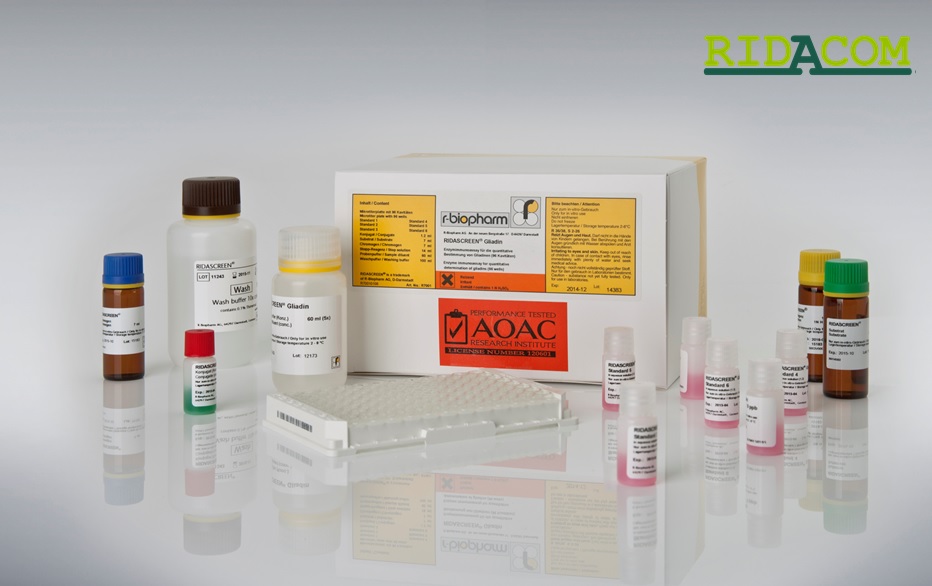
RIDASCREEN® β-Lactoglobulin is a competitive enzyme immunoassay for the quantitative analysis of β-lactoglobulin in hydrolyzed milk products including hypoallergenic baby food. The assay is calibrated to hydrolyzed β-lactoglobulin check samples; the standards consist of native β-lactoglobulin. The assay detects native and processed protein and fragments thereof (during the heating of milk, the native ß-lactoglobulin is partially denatured).
General Information:
Cow’s milk contains approx. 3.2% proteins (2.6% caseins and 0.6% whey proteins). Approx. half of the whey fraction consists of β-lactoglobulin.
The allergen can be present as an ingredient or as a contamination in raw and cooked products. According to the regulation (EU) No. 1169/2011, milk and products thereof must be declared on food labels. Similar regulations exist e.g. in the USA, Canada, Australia and New Zealand.
More and more people suffer from milk allergies. It is important to note that milk allergy is not the same as lactose intolerance. The cause of lactose intolerance is a deficiency of an enzyme that degrades lactose (milk sugar). Milk allergy, on the other hand, is a true food allergy which is caused by allergenic constituents of milk proteins. Cow’s milk contains several proteins that have an allergic potential. The most important ones are casein and ß-lactoglobulin.
ß-lactoglobulin
ß-lactoglobulin is a whey protein. It is present in fresh milk and in hydrolysed dairy products such as baby food. The allergy to ß-lactoglobulin usually occurs in children, while adults are more often allergic to casein. Since ß-lactoglobulin is not heat-stable, allergic people often tolerate cooked dairy products. In addition, products made from sheep or goat milk can be well tolerated.
As an allergen, milk is subject to labelling in many countries. In order to ensure a product that is safe for milk allergic people, it is important to test food and surfaces for milk protein during the production process.
Test Format: Microtiter plate with 48 wells (6 strips with 8 removable wells each)
Standard Range: 0 ng/mL (zero standard), 10 ng/mL, 30 ng/mL, 90 ng/mL, 270 ng/mL, 810 ng/mL ß-lactoglobulin
Sample Preparation: homogenizationand extraction
Incubation Time: 2 h 45 min
Detection Limit:
- Limit of detection: 0.12 mg/kg (ppm) β-lactoglobulin
- Limit of quantification: 5 mg/kg (ppm) β-lactoglobulin
Cross-reactivity:
ß-Lactoglobulin: 100%
α-, ß-, κ-Casein: < 1%
α-Lactalbumin: < 1%
Bovine serum albumin: < 1%
YouTube - Allergen Analysis Test Procedure for the Sandwich ELISA RIDASCREEN®FAST